




Streets of Rage is a beat 'em up game developed and published by Sega in 1991 for the Mega Drive/Genesis. The game is also known in Japanese as Bare Knuckle: Ikari no Tekken.
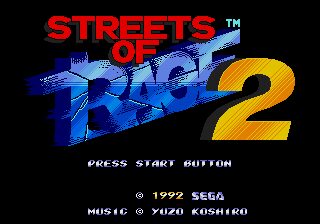
The game quickly became a bestseller and is part of a trilogy that continued with Streets of Rage 2 in 1992 and Streets of Rage 3 in 1994.
The story focuses on the three main characters, cops who witnessed how the city got out of control due to the mafia. As a result, the three young men proposed an initiative to restore peace to the town. However, their boss stopped them. Seeing that both he and most of his colleagues are bought by the criminals, they decide to abandon the force and begin a suicide mission in which, with their fists and feet alone, they try to stop Mr. X, the leader of the thugs.
Despite not moving away from the classic beat-'em-up style, Streets of Rage has specific characteristics that set it apart from other beat-'em-ups. Firstly, all the characters know martial arts, so, apart from the typical fists and flying kicks, they can also do things like locks or even perform a suplex on an enemy. Moreover, the protagonists can stop the game and receive help from an allied policeman. This guy will support the player and attack the enemies with heavy weapons.
An alternate ending has also been added, which is only unlockable in multiplayer mode. After both players face the final boss by passing through 8 levels and defeating several bosses along the way, the mafia leader asks them if they want to join him. In case one of the youngsters answers "No" and the other says "Yes," Mr. X forces them to fight in a duel to the death. When a winner is defined, and the other loses the game forever, the one who is left must refuse the offer to be the boss's right hand and fight him alone. If the protagonist wins, he will become the new mafia leader, and, with the avatar of the young man laughing, a text will appear, reminding the player that he got the bad ending.
The game's graphics are very well done. Despite using several colors, the lack of brightness is quickly noted in the streets full of vandalism and destruction. Even in the most luxurious places, like the level that takes place in a first-class cruise ship, you can see a background with a city drowned in a deep red that symbolizes the fury and violence of its inhabitants. In a more direct reference, this title uses the same colors as the Robocop saga, which makes a lot of sense because, even though they live in different universes, they share the same criminal situation.
The music of the title is very well elaborated and catchy. It has some funk beats and electronics that give the feeling of being made by a DJ in an alternative bowling alley. On the other hand, even with the intense bass that accentuates the game's atmosphere, the chosen rhythms feel very cheerful and out of place compared to what happens on screen. Even though this isn't something that gets you out of the game, given the tools they had, they could have done much better.
Despite this small setback (at least in my opinion), the critics praised the dark style, the image, and the excellent implementation of the 2-player mode of the adventure. All this, along with the sales success, led to the production of the next two installments, which were also critically acclaimed.
Being a combination of the already mentioned Robocop for the Genesis and the Double Dragon series, Streets of Rage is a game that all the fans of the fight genre must try.
Streets of Rage is one of our Top 20 Sega Genesis Games of all time.


 Download for Mac
 Download for PC