
Retro games, abandonware, freeware and classic games for PC and Mac


Author: GN Team - Published: 3 November 2015, 2:00 am
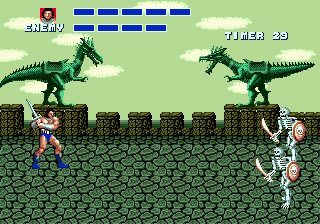
Golden Axe is a side-scrolling hack-and-slash fantasy game created by Sega and released for arcade machines in 1989. The game was ported the same year to the SEGA Mega Drive/Genesis and in 1990 to the Amiga, Atari ST, and MS-DOS platforms. There are also versions for the Commodore 64 and ZX Spectrum.
The player chooses one of the three characters (a barbarian known as Ax Battler, a dwarf named Gilius Thunderhead, or the amazon Tyris Flare) and tries to defeat the evil Death-Adder, who has imprisoned the King and his daughter and stolen the legendary Golden Axe.
Read More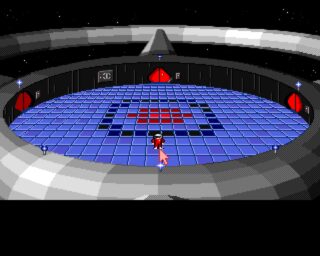
Author: GN Team - Published: 1 November 2015, 3:04 pm
Starflight is one of the first sandbox space exploration role-playing and simulation games. It was developed by Binary Systems and published by Electronic Arts in 1986 for MS-DOS. In 1989, it was ported to the Amiga and Commodore 64, while the Atari ST and Macintosh versions were released in 1990. An improved SEGA Genesis/Mega Drive version was created in 1991. The game received excellent reviews from both contemporary and modern critics.
The game's goals include exploration, collecting lifeforms and minerals, and finding habitable colony worlds. It is entirely non-linear, and the player must begin assembling a crew and preparing the spaceship before he can leave the spacedock and start the adventure.
Read More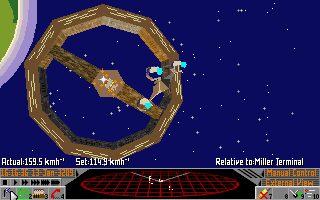
Author: GN Team - Published: 18 September 2015, 3:05 am
The 350th game on GamesNostalgia is our favourite game ever: Frontier: Elite II. You can download here the PC version, which had a more advanced graphics engine, featuring texture mapping, compared to the Amiga version.
Frontier is a space trading and combat simulation published by GameTek in 1993 and released on the Amiga, Atari ST and DOS.
Read More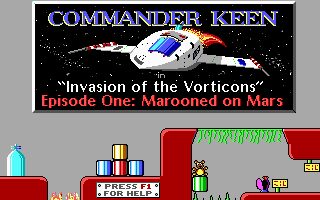
Author: Tasha - Published: 4 July 2015, 1:24 am
Commander Keen 1: Marooned on Mars is the first in the franchise of side scrollers of the same name, developed by id Software. The game was published by Apogee Software in 1990 for DOS. There are five entries in the series.
Playing as the pint-sized genius Billy Blaze, you find yourself lost on Mars after taking your homemade rocket out for a spin. After aliens jack (steal) pieces of his ship and run off with them, it’s BB’s job to get them back. Transforming into his galactic alter ego, Commander Keen, he has to navigate each level, avoiding enemies and traps, and retrieve his ship parts. Though young, he does not come unarmed and can utilize a ray gun to defend himself. Ammo is not unlimited, so some strategy is involved. Billy can also find other useful items around the levels to help on his way, like the handy-dandy pogo stick.
Read More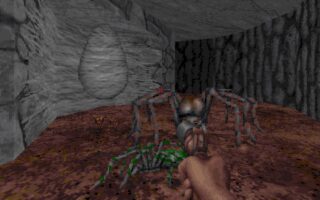
Author: André Eymann - Published: 29 May 2015, 8:32 pm
Blood is a horror first-person shooter created by Monolith Productions and published by GT Interactive in 1997 for MS-DOS. The game was designed by Nicholas Newhard, who was also the lead programmer.
The game was developed with the Build engine, the same technology as Duke Nukem 3D — both trying to match the FPS standard id Software had set
“Let the blood bath begin...” may be the ultimate statement when you wake up in your own grave in the first game level called “Cradle to grave”. You – Caleb – are an old-fashioned gunman from the early 20th century seeking revenge against your former master, Tchernobog, who betrayed you in your past life. And no: that name has nothing to do with the doomed Chernobyl. The name refers to a Slavic deity from the 12th century, often translated as “black god”. If you are interested in getting deeper into this topic, you may study the Chronica Slavorum written by the German priest Helmold von Bosau in 1168-1169.
Read More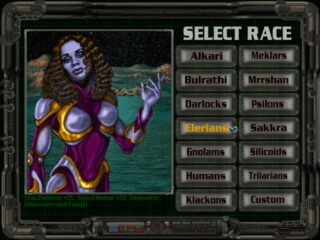
Author: GN Team - Published: 24 May 2015, 12:47 am
Master of Orion II: Battle At Antares, the sequel to Master of Orion, is a turn-based 4x space empire game designed by Steve Barcia and Ken Burd. The popular strategy game was developed by Simtex. MicroProse published the game in 1996, both for DOS and Windows 95.
Master of Orion 2 was a major upgrade compared to the previous Master of Orion. It featured much more complex gameplay, more alien races, and the possibility of creating a custom race. Battle was not possible between spaceships or planets, and marines could board enemy ships. Victory can be achieved with diplomacy or military domination.
Read More