




Joan of Arc: Siege & the Sword (Jeanne d'Arc in French) is a strategy and action game developed by Chip and released in 1988 for the Atari ST. One year later, Brøderbund published the Amiga and MS-DOS versions. The game puts you in control of the French heroine during the Hundred Years' War, blending strategic territory management with arcade action sequences in an ambitious attempt to recreate her military campaigns.
The game plays like an early ancestor of the Total War series, combining a strategic map where you manage resources, recruit troops, and plan campaigns with action sequences in which you participate in sieges, duels, and battles. This hybrid approach was innovative for 1989, offering far more depth and variety than the more famous Defender of the Crown, which it clearly drew inspiration from.
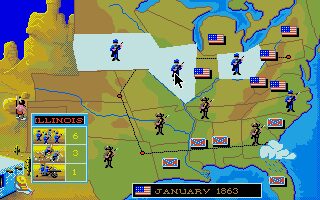
On the strategic layer, you navigate a map of medieval France, conquering territories, managing armies, and making tactical decisions about where to strike next. Each conquered region brings you closer to fulfilling Joan's historical destiny of liberating France from English occupation.
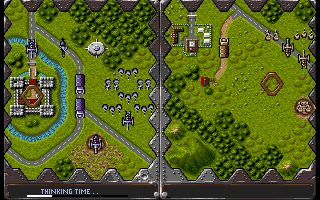
Where Joan of Arc distinguishes itself is in the action sequences. Instead of simply resolving battles through statistics, you actively participate in various arcade-style challenges. Sieges require you to position troops and manage assaults in real-time. One-on-one duels test your reflexes in sword combat.
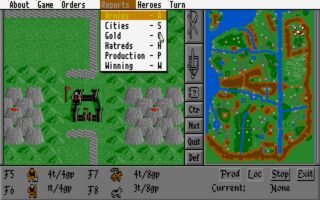
The graphics are mixed. Some screens feature detailed, attractive artwork that effectively captures the medieval atmosphere. Others are rather plain, creating an inconsistent visual experience. Character sprites during action sequences are functional. However, the Amiga version is definitely better than the DOS version, which is limited to EGA graphics.
Despite these flaws, Joan of Arc offers something special. The combination of strategic depth and arcade action creates engaging gameplay that feels unique. Compared to Defender of the Crown, which relied heavily on gorgeous graphics and cinematic presentation but offered relatively shallow gameplay, Joan of Arc prioritizes substance over style. The strategic layer is deeper, the campaign is longer, and the variety of action sequences provides more engagement, even if the presentation isn't as immediately stunning.
The game rewards persistence. Early frustrations with the interface and repetitive elements give way to appreciation for the ambitious scope and satisfying progression. The historical setting adds weight to your actions, making victories feel meaningful as you guide Joan through her legendary military achievements.
Joan of Arc: Siege & the Sword belongs in the anthology of the best Amiga games despite its technical shortcomings and uneven presentation. For players who appreciate strategy games with action elements and can tolerate some rough edges, this remains an entertaining and rewarding experience—a hidden gem that deserves recognition alongside more celebrated Amiga strategy titles.


 Download for PC


 Download for Mac