
Retro games, abandonware, freeware and classic games for PC and Mac



Author: GN Team - Published: 4 November 2019, 2:13 am
Backyard Baseball is a baseball game created by Humongous Entertainment and released for Windows and Macintosh in 1997.
It's the first of a long series of successful titles, the last one of which was released in 2015.
The idea of a videogame about kids playing baseball was developed by Nick Mirkovich, illustrator and animator. He presented the concept to the legendary Ron Gilbert (not only the creator of Maniac Mansion but also the founder of Humongous), and after a while, he approved. The design team was made of Mirkovich, Richard Moe (a programmer), and Mark Peyser (a graphic designer).
Read More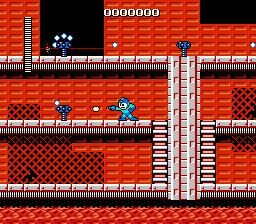
Author: Tasha - Published: 23 October 2019, 12:38 am
Mega Man (aka Rockman) is a platform game developed and published by Capcom in 1987 for the NES. It is the first in the Mega Man franchise, boasting a voluminous game library. Three years later, it was released for MS-DOS.
The PC version was developed by Hi-Tech Expressions, the studio that also created Mega Man 3: The Robots are Revolting.
Mega Man began his life as a humble cleaning robot named Rock (hence the Rockman moniker). He was created in a lab alongside several other robots, eventually becoming his enemies when one of the scientists decided to use them for world domination. Volunteering for an upgrade, Rock becomes Mega Man to try to stop the evil scientist and his mechanical minions.
Read More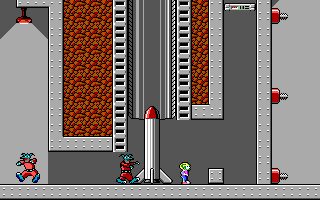
Author: Tasha - Published: 23 October 2019, 12:33 am
Commander Keen 3: Keen Must Die is the third episode in the Invasion of the Vorticons series and was developed by id Software. It was published by Apogee in 1990 for DOS.
Commander Keen, or rather an 8-year-old prodigy Billy Blaze, has already saved planet Earth under his belt when he decides to take the fight to the Vorticons’ home planet. By now, CK knows that the Vorticons did not attack Earth of their own volition; they are being controlled by the Grand Intellect. While on his journey to take out the Grand Intellect, it issues an order: Keen must die!
Read More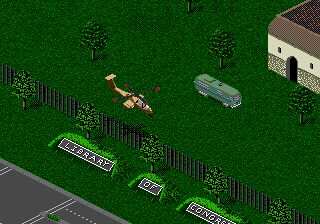
Author: GN Team - Published: 20 October 2019, 5:26 pm
Jungle Strike is an action/shooter game with strategy elements created by Electronic Arts originally for the Sega Mega Drive/Genesis.
The game is the sequel to Desert Strike: Return to the Gulf, the most successful title released by Electronic Arts in the early '90s. Jungle Strike was released in 1993, one year after the first title. The game was also ported to SNES, Amiga (in 1994), and MS-DOS (in 1995).
The game mechanics are not so different compared to the predecessor. The main difference is the addition of new vehicles, including a motorbike and an F-117, even though the helicopter is still the primary vehicle. The settings are different: this time, you will have to fight against a South American drug lord, plus the son of the Desert Strike villain.
Read More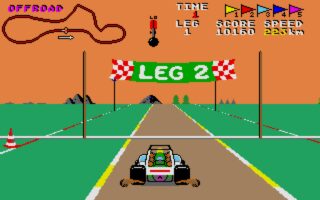
Author: GN Team - Published: 13 October 2019, 12:08 am
Speed Buggy (Buggy Boy in the UK) is an arcade racing game created by Tatsumi, initially released in 1985.
From 1987 to 1988, several home computer versions were created, including the Commodore 64, ZX Spectrum, Amiga, and Atari ST ports. The excellent C64 edition became one of the most appreciated racing games for the 8-bit computer. The Amiga version received positive ratings, thanks to the faithful reproduction of the game mechanics. The developers could have done better on the Amiga in terms of graphics: since the game was converted from Atari ST, it's limited to 16 colors. However, despite the simplicity, the visuals are pleasant and valuable.
Read More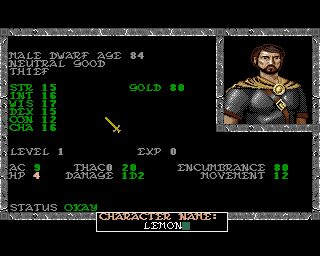
Author: GN Team - Published: 12 October 2019, 1:04 pm
Pool of Radiance is a computer RPG created by Strategic Simulations, Inc., and released initially for the Commodore 64 and Apple II in 1988.
It is the first official adaptation of the rules of the tabletop role-playing game Dungeons & Dragons, specifically AD&D 2nd edition. The game was ported to many other platforms, including DOS, Macintosh, and NES.
The Amiga version, released in 1990, wasn't developed internally at SSI. Ubi Soft handled the conversion.
Pool of Radiance was a complex project that took more than 1 year to develop. The rules of D&D, including combat, statistics, classes, and rolls of dice, were faithfully recreated. The Forgotten Realms setting, with its monsters, cities, and gods were added to the game. Even the graphics were taken from the official manuals. TRS artists and authors collaborated with SSI to create the game.
Read More