
Retro games, abandonware, freeware and classic games for PC and Mac


Author: Tasha - Published: 23 April 2017, 1:16 am
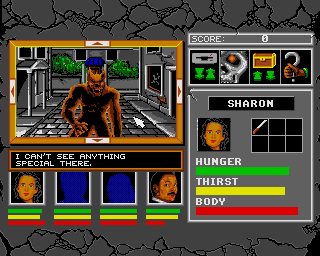
Lords of Doom is a horror adventure/role-playing game from Attic Entertainment Software, published by Starbyte Software in 1990. It was released for Amiga, Atari, Commodore 64, and DOS.
The setup of this game is prevalent in many other titles from Attic. It mixes RPG and adventure elements in mock 3D environments and uses a first-person view, similar to the setup of Elvira: Mistress of the Dark.
In a remote town, many things that go bump in the night have come out in droves to eat the locals. With the help of a couple of monster hunters, two townies are taking the little burg back. Each character has their own needs meters that show their HP, thirst, and hunger levels, and yes, you will have to find nourishment to keep your characters running. The team must battle through the monster hordes in real-time combat and take out their masters to save the town. Aside from fighting, exploration and puzzle-solving are also needed. Though magazines met the game with mixed reviews, it was not a bad start for the company. Real RPG fans will want to add this title to their collection.
Read More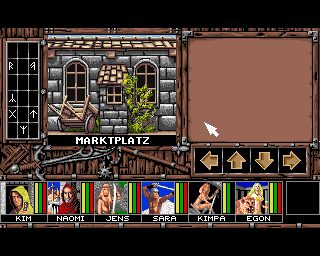
Author: GN Team - Published: 22 April 2017, 2:40 pm
Spirit of Adventure is a fantasy RPG/dungeon crawler designed and programmed by Hans‑Jürgen Brändle and Guido Henkel, founders of attic Entertainment. It was published in 1991 for Amiga, Atari ST, Commodore 64, and MS-DOS.
The game, released in German only, has many classic elements of computer role-playing games. You can manage a party of 6 characters chosen from several classes such as warrior and magician, but also amazon, goddess, fairy, and banshee. Most of the gameplay is dungeon-crawling, from a pseudo-3d first-person perspective, but of course, you can also visit cities and talk to people, accepting quests to advance with the plot.
Read More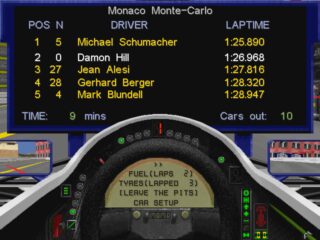
Author: Tasha - Published: 21 April 2017, 12:41 am
Grand Prix II, also known as Formula One Grand Prix 2, is the second Formula 1 racing game in the series created by Geoff Crammond. It was published by MicroProse in 1995 for MS-DOS.
This installment was officially licensed and was based on the 1994 Formula 1 race season. This game set the standard for racing games for years, as it took the realism of racing sims to a whole new level. Featuring SVGA Graphics with 3D mapped tracks that were incredibly true to life, you can race every circuit from Monte Carlo to Australia. In GP2, the physics are as accurate as possible and allow for vehicles to become airborne during a race. The cars will also show wear and tear and will smoke or catch fire. Grand Prix II was the first game to feature visible car failure animations. The game also features multiple camera angles to choose from, though the first person from the cockpit is primary.
Read More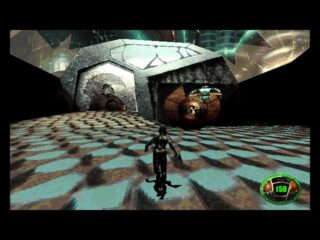
Author: Tasha - Published: 21 April 2017, 12:22 am
MDK is a science fiction shooter developed by Shiny Entertainment and published by Playmates Interactive Entertainment for DOS and Windows in 1997.
In order to keep players from needing GPU enhancements to run the game on their computers, the developers wrote their own programming language from scratch. This made the game’s 3D levels and graphics better able to run on more computers, making it widely accessible. It was later ported to Mac and PlayStation and was followed by one sequel.
Playing as Kurt, the unwitting janitor, you are kidnapped by possible mad scientist Dr. Hawkins and forced to save the world. The janitor scenario puts me in mind of Space Quest, though the overall circumstances are different. Kurt’s mission is to take out the ‘mine crawlers’ the aliens are using to bleed the Earth dry. Each minecrawler is huge and requires different things to defeat. Outfitted with a special combat suit and a gun strapped to his arm, Kurt is ready for battle. The suit also comes equipped with a parachute that can be used in a number of ways. Kurt will acquire explosives and upgrades along the way as well. Not just your usual run-and-gun, it features variable gameplay, strange enemies, crazy power-ups, stylish level entrances, and much more. The fast pace and sharp sense of humor of this one-of-a-kind cult classic, coupled with the surreal environments make it a must-play.
Read More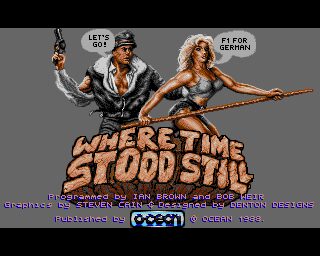
Author: Tasha - Published: 20 April 2017, 1:57 am
Where Time Stood Still is an isometric arcade adventure game developed by Denton Designs and published by Ocean Software in 1987. The game was developed *exclusively* for ZX Spectrum 128K, Atari ST, and MS-DOS.
The plot is based heavily on the 1974 film "The Land That Time Forgot" and other Lost World books/movies. The passengers of a plane crash land in an uncharted area only to discover dinosaurs and primitive humans inhabit it. The game's object is to keep your crew of four alive through all the dangers the site offers. Threats lurk around every corner, and you must be quick on your feet to get past them. The game randomizes with each playthrough, with random levels like Diablo, so you won't encounter the same things in the same places. Each party member has their strengths and weaknesses that shape how you deal with them. The crew can collect weapons and other valuable items to aid in their bid for survival and will also encounter friendly natives. Do your job as a leader, and you will lead these hapless folks to safety. If you're feeling a little evil, you can abandon everyone and leave them to their fate since only one party member is required to continue.
Read More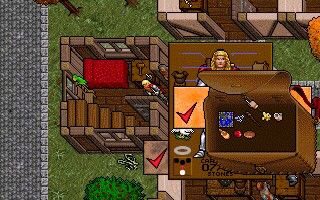
Author: Tasha - Published: 20 April 2017, 1:29 am
Ultima VII: The Black Gate is a role-playing game and the seventh in the Ultima series designed by Richard Garriott. It was developed and published by Origin Systems and released for DOS in 1992.
This game was a turning point for the series as it introduced many new gameplay conventions. Aside from general improvements to the graphics, this installment departed from using tile and grid-based movement. It also switched from mainly being keyboard-controlled to mouse-oriented controls with optional keyboard hotkey usage. Players can move items by dragging and dropping them using the mouse rather than using the ‘move’ command. Ultima VII also introduced real-time gameplay that will pause only when specific menus are open, like your inventory. This is also the case during combat, and your party members are largely AI-controlled with behaviors that you set them to.
Read More