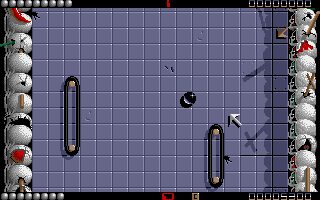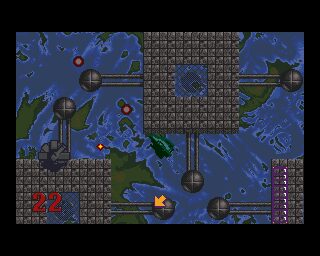


Martin Edmondson: The Creator of Shadow of the Beast, Driver and Reflections Interactive
 By: Tasha
Last updated: 18 March 2026, 4:58 pm



Martin Edmondson is one of the most distinctive figures in British game development. Co-founder of Reflections Interactive, he spent the better part of three decades creating games that were technically ahead of their time — from the parallax-scrolling spectacle of Shadow of the Beast in 1989 to the open-world car chases of Driver a decade later. His career spans the Amiga era, the PlayStation generation, and the early years of open-world gaming, and the studio he built in Newcastle became one of the most respected in Europe.
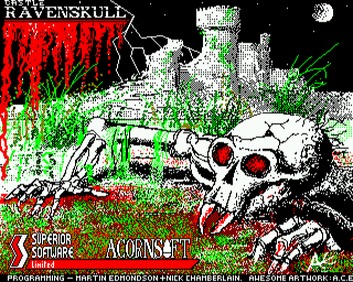
Martin Edmondson and Nicholas Chamberlain founded Reflections Interactive in Newcastle upon Tyne in 1984, initially developing games for the BBC Micro. Their first project was a clone of Paperboy called Paper-Round, which they developed over two years and never released. While working on it, they began a new project that would actually ship: Ravenskull, published in 1986 by Superior Software for the BBC Micro and Acorn Electron. It was an adventure game with a top-down view, offering four character classes — Adventurer, Elf, Warrior, Wizard — and tasking the player with roaming Castle Ravenskull to find the pieces of a silver crucifix. Modest in ambition, but a start.
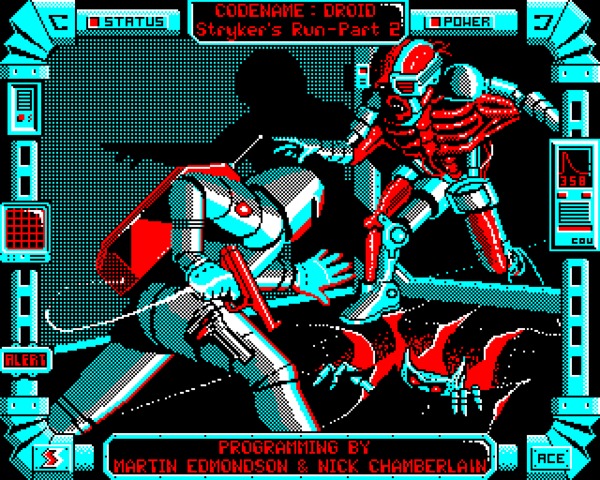
Two more projects followed: a port to Acorn Electron of Stryker's Run — a BBC Micro game designed by Chris Roberts, who would later create Wing Commander — and its sequel, Codename: Droid. These were workmanlike jobs, not showcase pieces. What came next would be a matter entirely different.
Shadow of the Beast
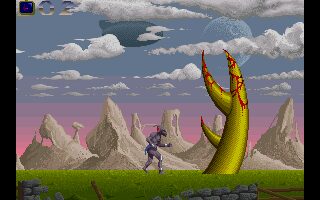
Shadow of the Beast began, in a sense, as a technical experiment. Paul Howarth was testing the parallax capabilities of the Amiga's Agnus chip — specifically the blitter — and the resulting demo caught the eye of Psygnosis. Edmondson, who had joined the project, took the visual foundation and built a game around it, designed from the outset to be as visually overwhelming as possible. The cover art was commissioned from Roger Dean, the designer famous for his work on Yes and Asia album covers, who merged a stone-age aesthetic with technology to create one of the most memorable box arts of the era.
The game was released in 1989 and made an immediate impact. Twelve levels of parallax scrolling and a soundtrack by David Whittaker gave it an atmosphere that no other home computer title had matched. Aarbron, the protagonist, was kidnapped as a child and transformed into a monstrous servant of the Beast Lord Maletoth; the game opens with him witnessing his father's execution, triggering his memories and his need for revenge. The plot was detailed in the manual, which was necessary — the game itself communicated very little of it.
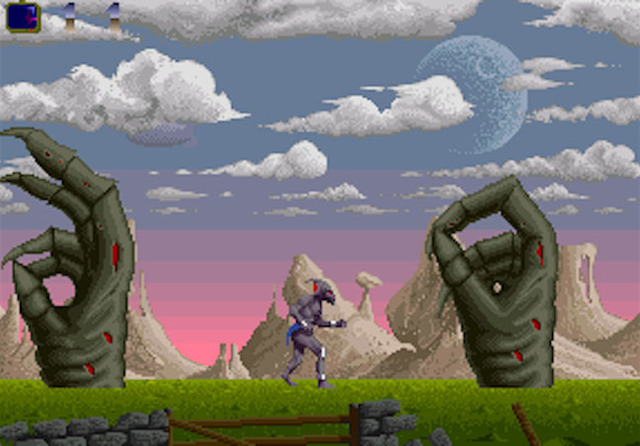
What Shadow of the Beast communicated clearly was difficulty. Edmondson was drawn to games that demanded mastery, and the original Shadow of the Beast reflected this without compromise: one life, limited health, no continues, no checkpoints. Death returned the player to the very beginning. The game could, once understood, be completed in under an hour — but getting there required learning its logic through repeated failure. The game was ported to Atari ST, Commodore 64, Amstrad CPC, ZX Spectrum, Master System, and PC Engine; the PC Engine version is often considered the definitive release, with enhanced graphics, animated intros, and CD-quality audio. The Sega Genesis port was more controversial — the conversion team failed to account for the difference between the PAL 50Hz and NTSC 60Hz refresh rates, resulting in a version that ran 16.7% faster than the original, making an already punishing game significantly harder.
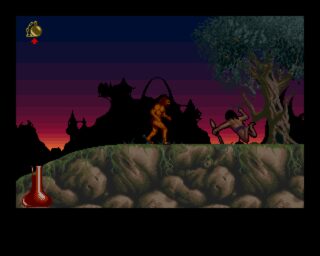
Shadow of the Beast II followed in 1990. Aarbron, now in half-beast form, must find his kidnapped sister in the lands of Kara-Moon. The sequel introduced more puzzles alongside the action, with Tim Wright replacing Whittaker on the soundtrack — a score that many players consider the finest in the series. A Sega/Mega CD port added voice acting, FMVs, and a new soundtrack, and softened some of the harder sections. The game received the Best Graphics award at the Golden Joystick Awards that year.
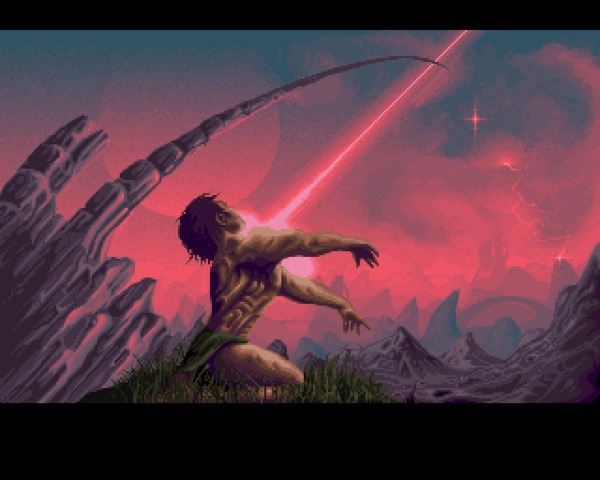
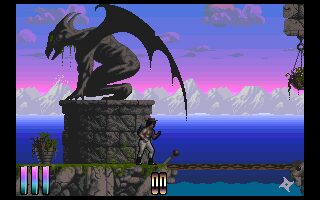
Shadow of the Beast III, released in 1992, was exclusive to the Amiga. A Mega Drive version was in development but never released. The final chapter in Aarbron's story was structured around four distinct areas rather than the single continuous world of its predecessors, with a greater emphasis on puzzle-solving alongside combat. Tim Wright returned for the score.
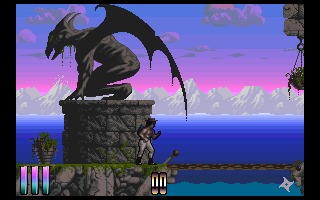
The series concluded without reaching as wide an audience as the first two entries — the Amiga exclusivity and the reputation for punishing difficulty kept many players away.
Destruction Derby and the Shift to Vehicles
In 1990, Reflections released Awesome, a sci-fi shooter designed and programmed by Edmondson with Cormac Batstone, with a soundtrack by Tim Wright. In 1994 came Brian the Lion. Then in 1995, Reflections released Destruction Derby, and everything changed.
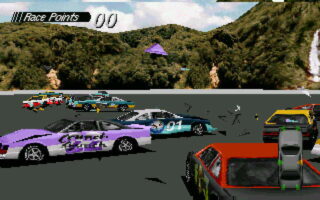
Critically acclaimed for its realistic physics engine and the sheer satisfaction of vehicular destruction, Destruction Derby became Reflections' biggest commercial hit to date. Both it and its sequel sold over a million copies each. The game offered four modes — a points-for-destruction derby, stock car racing, a hybrid of the two, and a time trial — and established Reflections as specialists in driving physics. It was the beginning of a new direction for the studio, and one that would define the next fifteen years of their work.
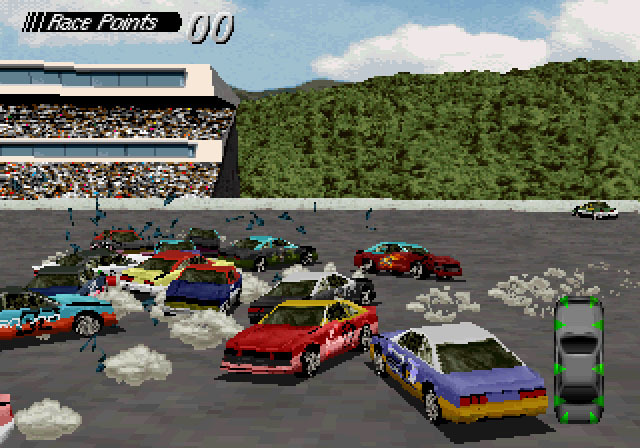
Edmondson himself was not involved past Destruction Derby 2. But the foundation the series laid was what made Driver possible.
Driver
On 9 January 1999, it was announced that Reflections had been acquired by GT Interactive the previous year. The same year, they released Driver.
The game originated in Edmondson's personal obsession with car chase films. He grew up watching Walter Hill's The Driver (1978), Bullitt, and Vanishing Point, and wanted to make a game that captured the cinematic feeling of a real movie car chase — not a videogame car chase, but the specific tension and physicality of the 1970s genre. When Grand Theft Auto was released in 1997, Reflections saw an opportunity: GTA's top-down view limited the action to a 2D plane. What if the open world of GTA were married to the 3D driving physics Reflections had developed with Destruction Derby?
According to Gareth Edmondson, who served as project manager, the development was gruelling: "We were reinventing gameplay technology in many new ways. It was the first game to tackle the free-roaming city environment, recreate an entirely new vehicle-destruction system, and develop an entirely new in-game AI system." The result, two and a half years after Grand Theft Auto's release, was something new.
Driver put the player in the role of Tanner, an ex-racing driver working undercover to infiltrate a criminal organisation. The game opened with a now-infamous tutorial set in a parking garage — a series of driving tests so demanding that many players never got past it. Those who did found four open cities: Miami, San Francisco, Los Angeles, and New York. The world had no pedestrian casualties (everyone in the game moved as if they were related to The Flash), a Felony system that escalated police pursuit based on infractions committed in the presence of officers, and a Director's Mode that let players place cameras and edit custom replays of their best moments. It was a game about the feeling of driving, not just the act.
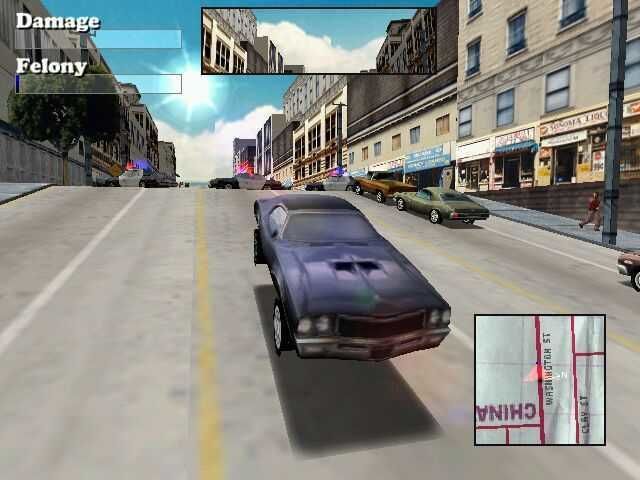
Driver was a commercial phenomenon. It became the 27th-best-selling game on PlayStation, with over 3 million copies sold, and the 42nd-best-selling PC game between 2000 and 2006. Gareth Edmondson spent only fourteen months on Driver 2, which added on-foot exploration and hijacking — though the aging PlayStation hardware showed its limits, with notable bugs and framerate issues. The Game Boy Advance adaptation, Driver 2 Advance, was developed by Sennari Interactive, not Reflections. When Rockstar North released Grand Theft Auto III in 2001, the competitive landscape shifted decisively. GTA's third entry took the open world that Driver had helped establish and expanded it into something that left most rivals behind.

Reflections continued. Driv3r arrived in 2003 with multiple cities and on-foot sections, but was mired in controversy over alleged pay-for-review deals with gaming press, and struggled to compete with Rockstar. Driver: Parallel Lines followed in 2006, more polished but increasingly in GTA's shadow. Martin Edmondson had already departed by this point — he left Reflections in 2004 following a dispute with Atari over his contract, and he sued for constructive unfair dismissal. His brother Gareth took over as studio manager.
Ubisoft and Driver: San Francisco
In July 2006, Atari sold Reflections to Ubisoft, which renamed the studio Ubisoft Reflections. The Driver series went dormant for several years. Then Ubisoft approached Martin Edmondson — first as a consultant, then as creative director — for what would become Driver: San Francisco.
Released in 2011, Driver: San Francisco was the most ambitious and, in many ways, the most unusual entry in the series. Tanner is in a coma following the events of Driv3r. Unaware of his condition, he discovers he can "shift" — projecting his consciousness into any driver in the city, switching between vehicles seamlessly. Edmondson described the mechanic as a deliberate risk: the team was aware it was an odd direction for a driving game. The gamble worked. Critics and players responded warmly, and the game is now generally regarded as the best Driver since the original. A hidden Easter egg remade the notorious parking garage tutorial from the first game, unlocked by finding a DeLorean and reaching 88 miles per hour.
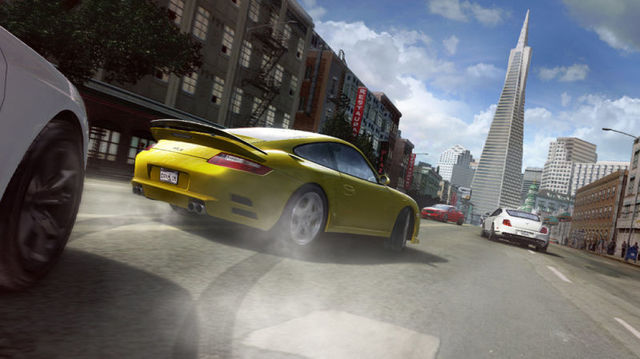
Gareth Edmondson left Reflections in November 2011, two months after the launch of Driver: San Francisco. Martin followed. Since then, the brothers worked together at Thumbstar, a mobile game company, where Martin became chief creative officer and Gareth CEO. They released mobile titles, including Gunfinger and Gem Smashers. Gareth later left to join Creative Assembly in 2016.
Ubisoft Reflections, without the Edmondson brothers, has since worked on The Crew (in collaboration with Ivory Tower) and contributed to various Ubisoft projects. The studio, now headed by Lisa Opie, remains based in Newcastle. Driver: San Francisco remains the last Driver game; the series has been dormant since.
Legacy
Martin Edmondson's career spans a particular era of British game development, during which some of the medium's most technically ambitious work was produced. Shadow of the Beast remains one of the defining visual achievements of the Amiga era, a game that pushed the hardware to its limits and forced players to push themselves. Driver arrived at a precise historical moment — two years before Grand Theft Auto III redefined the genre — and did something that no game had done before: it made the player feel like they were inside a 1970s car chase film.
Both achievements stemmed from the same instinct: a preference for games built around a specific feeling rather than a specific genre, and a willingness to use technology as a tool for atmosphere rather than spectacle for its own sake. That instinct ran through everything from Shadow of the Beast's parallax scrolling to Driver's Director's Mode.
The games made by Reflections Interactive under Edmondson's direction are available on GamesNostalgia, including Shadow of the Beast, Shadow of the Beast II, Shadow of the Beast III, Awesome, Destruction Derby, and Driver.
Originally published in 2018. Expanded and updated in 2026.