

In August 1982, Commodore unveiled a computer that would change everything. The Commodore 64 had 64 kilobytes of RAM — extraordinary for a consumer machine at that price — but what made it truly remarkable were two chips that its engineers had quietly developed the previous year. Al Charpentier's VIC-II gave the machine sixteen colors, hardware sprites, and smooth parallax scrolling. Bob Yannes's SID chip, designed by a 24-year-old who had grown up building analog synthesizers and listening to Kraftwerk, was something the computing world had never encountered before: a genuine three-voice synthesizer on a single chip, capable of waveforms, envelope control, and filters that could produce music with a warmth and character that no other home computer could match. No competitor had anything like it.

Jack Tramiel priced it to sell. Through a ferocious price war with Texas Instruments that destroyed TI's consumer division entirely by October 1983, Commodore drove the C64's street price below $200. By the end of 1983, sales had passed two million units. For a few extraordinary years in the mid-1980s, the Commodore 64 was the dominant gaming platform — not a console, but a full-fledged computer. It remains the best-selling single home computer model of all time.
The Machine That Demanded Mastery
Programming the C64 was not straightforward. Its BASIC was primitive — the same code Commodore had bought from a young Bill Gates in 1977 for a flat fee of $10,000, with no graphics or sound commands. To make the machine sing, programmers had to learn assembly language deeply. They had to understand raster interrupts — exploiting the microseconds between the electron gun finishing one scan line and starting the next to swap colors or swap display modes mid-frame. They had to master sprite multiplexing, reusing the machine's eight hardware sprites by repositioning them so fast that the eye could not follow. They had to count every byte in a 64K address space shared between the program, the screen, the sound, and the disk buffer. The games that emerged from this hard-won understanding arrived in waves, each year pushing the platform further than anyone had thought possible.
The First Masterpieces
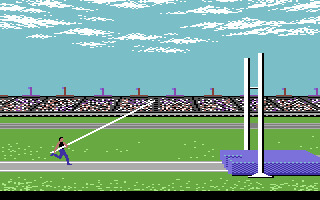
Epyx's Summer Games (1984) used virtually every technique the platform offered — multicolor bitmap graphics, double-buffered scrolling, raster interrupt tricks to change palettes mid-screen — and crammed eight complete athletic events into a machine with the processing power of a pocket calculator. The same year, Activision released Ghostbusters, designed by David Crane: a game that combined resource management, driving sequences, and action in a way that felt genuinely cinematic, its iconic theme tune announcing to anyone within earshot exactly what the SID chip was capable of. Two years later, Access Software's Leader Board Golf (1986) built an entire 3D golf simulation from a set of 30 polygon "islands" that could be rearranged into different course configurations, allowing it to store four complete 18-hole courses in memory alongside the game engine. The three-click swing system the Carver brothers invented here would define computerized golf for decades.
The Years of Maturity
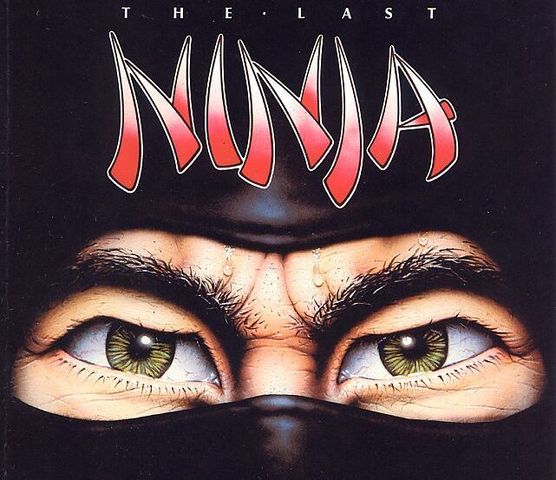
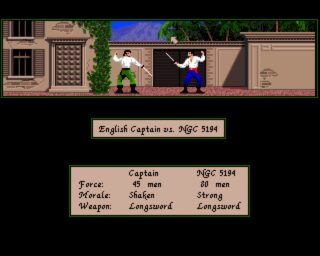
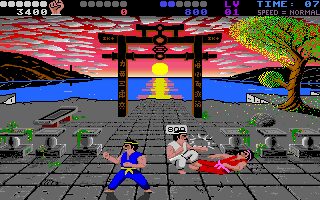
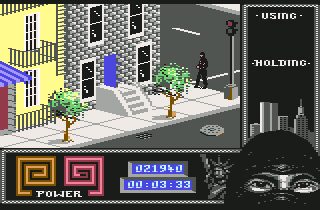
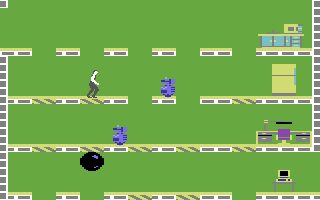
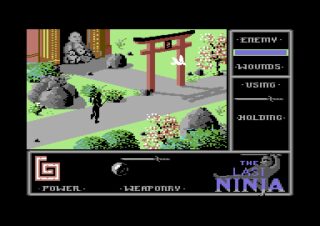
By 1987, the C64's developers had fully mastered their machine, and the results were extraordinary. Sid Meier, after making MicroProse's reputation with military simulations, spent a vacation in the Caribbean becoming obsessed with the era of buccaneering and came back to make Sid Meier's Pirates! — a game that combined open-world exploration, naval combat, sword-fighting, trading, and map-based strategy, all in 64K, all harmonizing so naturally that it felt not like several games bolted together but like a single coherent world. That same year, on the other side of the ocean, System 3 released The Last Ninja, a game of cinematic presentation and demanding isometric combat; Sensible Software brought Wizball, a game of fluid physics and cooperative play; Impossible Mission delivered what may be the most memorable line in gaming history — "Another visitor. Stay a while... stay forever!"; and International Karate + by System 3 offered fluid three-player combat, making it one of the finest fighting games the platform ever produced.
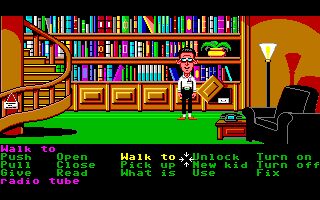
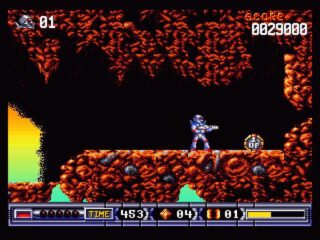
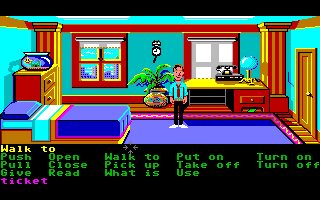
LucasArts' adventure games found a natural home on the C64, too. Maniac Mansion had introduced the SCUMM engine in 1987, and Zak McKracken and the Alien Mindbenders followed in 1988 — a globe-trotting adventure that remains one of the warmest and strangest games LucasArts ever made. And in 1990, Turrican by Manfred Trenz for Rainbow Arts served as the C64's farewell masterpiece — a run-and-gun game of enormous levels filled with secrets, its controls fluid and responsive in ways that felt almost impossible on the hardware. By then, the PC and the Amiga had technically overtaken the platform, but Turrican was proof that great game design doesn't require great hardware.
The Legacy
The Commodore 64 was discontinued in 1994, the same year Commodore filed for bankruptcy. No other 8-bit platform came close to its software library, its commercial impact, or the sheer quality of what its best programmers managed to wring from its hardware. If you want to know more about C64 games, remember that all the games on GamesNostalgia are free to download and play on Windows and Mac via emulation.