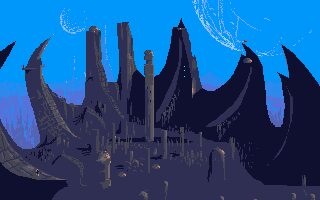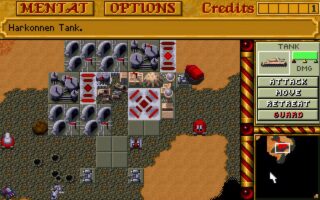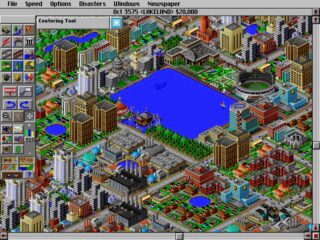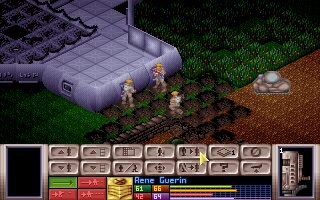


In July 1985, Andy Warhol took to the stage at Lincoln Center in New York and used a brand-new computer to create a digital portrait of Debbie Harry. The machine was the Commodore Amiga 1000, and its launch was one of the most spectacular in the history of personal computing. Nobody in the audience had seen anything like it.

The Amiga 1000 was built around a Motorola 68000 processor — the same chip that powered the original Macintosh — but it was the custom chips that made it extraordinary. Agnus handled the graphics and DMA, Denise controlled the display, and Paula managed audio and I/O. Together, they gave the Amiga capabilities that no other home computer could match: 32 colours on screen from a palette of 4,096, hardware sprites, smooth parallax scrolling, and four-channel stereo audio. It was, in every meaningful sense, years ahead of its time.
What those custom chips could do in the right hands became clear in 1986, when Cinemaware released Defender of the Crown. Nothing on any home computer looked remotely like it — oil-painting backdrops, fluid animation, a cinematic presentation that made every other game of the era look primitive. It was the moment the gaming world understood what the Amiga was capable of.
The Amiga 500, launched in 1987 at a fraction of the original's price, brought those capabilities to a mass market. In Europe especially — the UK, Germany, France, Italy — it became the dominant home computer of the late 1980s and early 1990s, the machine every serious gamer wanted. It could do things the IBM PC simply couldn't, and it did them beautifully.
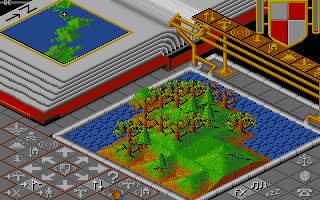
Cinemaware continued to push the platform with It Came From The Desert and Wings, two games that married cinematic storytelling with gameplay in ways nobody else was attempting. Psygnosis took a different approach with Shadow of the Beast — a game that was more technical showcase than deep experience, but an extraordinary one: parallax scrolling across twelve simultaneous layers, 128 colours on screen, a soundtrack that demonstrated Paula's audio capabilities at their peak. It wasn't the most playable game ever made, but it announced to the world — loudly — what Amiga hardware could achieve. That same year, 1989, Bullfrog released Populous — not a showcase but a masterpiece, a game that invented the god game genre entirely from scratch and sold over four million copies worldwide.
The Atari ST Competition
The Amiga's closest rival was the Atari ST, which had arrived on the market a few months earlier in 1985. The ST was built on the same Motorola 68000 processor and shared much of the same developer mindset — which created a challenge for Amiga owners. Many studios adopted the ST as their primary development platform and then ported their games to Amiga. The result was that those ports were often built around the ST's limitations: 16 colours on screen instead of the Amiga's 32, and audio that didn't exploit Paula's four channels. It was a frustration for Amiga owners.
That said, the quality of the games themselves often made the technical compromise irrelevant. Dungeon Master was so groundbreaking as a first-person RPG that nobody seriously complained about its graphics. Xenon 2: Megablast by The Bitmap Brothers was so enjoyable that the near-identical ST and Amiga versions barely mattered. Great games transcended the platform politics.
The Golden Age
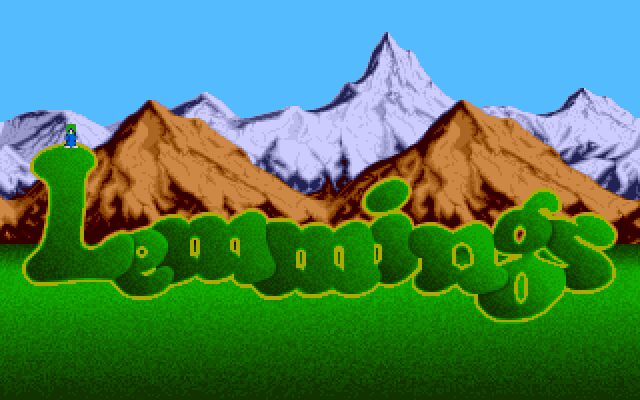
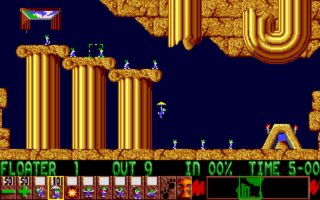
The Amiga's finest years came when European developers stopped looking at the ST and started writing directly for the platform. Gremlin kicked off the decade with Lotus Esprit Turbo Challenge in 1990 — silky-smooth racing that defined the arcade experience on the platform. DMA Design followed with Lemmings (1991), one of the most original puzzle games ever made. Delphine Software brought Another World the same year, a cinematic experience unlike anything else. Team17 delivered Alien Breed, combining Gauntlet-style gameplay with claustrophobic sci-fi atmosphere.
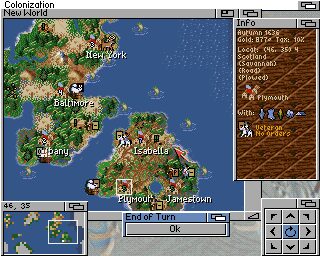
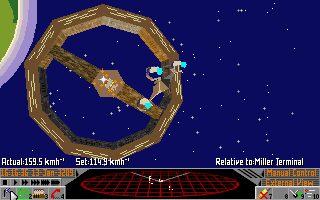
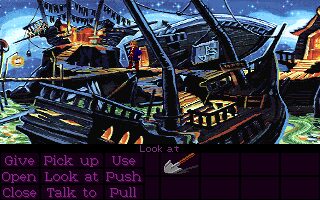
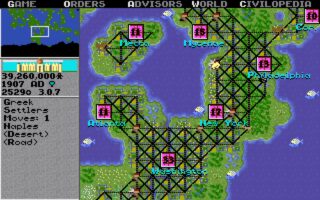
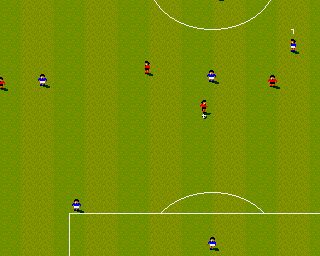
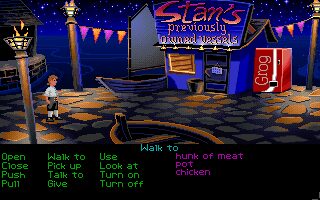
The golden age stretched well into the early 1990s, with masterpiece after masterpiece: Sensible Soccer, Superfrog, The Settlers, The Chaos Engine, Frontier: Elite II and many others. The Amiga also received exceptional versions of games that mattered beyond the platform: Civilization, Monkey Island 2: LeChuck's Revenge and many others.
Amiga's Answer to VGA: The AGA Chipset
Commodore's fatal mistake was timing. The AGA chipset — capable of 256 colours and a vastly expanded palette, the Amiga's answer to the PC's VGA standard — finally arrived with the Amiga 1200 in October 1992. By then, VGA graphics cards had been standard on IBM PCs for two years, and the window had closed. Some great games made it to AGA — Disney's Aladdin, Civilization, Alien Breed 2 — but the LucasArts adventure games, the genre that had defined graphical storytelling, never came. The platform that had once made PC games look primitive had been overtaken, and Commodore, mismanaged and underfunded, filed for bankruptcy in April 1994.
The Legacy
The Amiga died as a commercial platform, but never as a community. Developers, artists, and enthusiasts have continued to create new games and convert classic titles ever since. GamesNostalgia offers you a huge catalog of Amiga games, free to download and play on Windows and Mac via emulation. The Top 15 alongside is our selection — but it barely scratches the surface.